
Table of Contents
- Why Shoppers Look for an Arona Home Alternative for Appliance Deals
- Rent-to-Own Appliances: How the Lease Model Works
- Appliance Financing Options Compared: Store Credit, Lease, and Buy Now Pay Later
- Scratch-and-Dent Appliances: Quality, Warranty, and Real Savings
- Best Place to Buy Appliances: Matching the Store to Your Situation
- Total Cost of Ownership and Credit Impact: What the Price Tag Doesn’t Show
- Frequently Asked Questions
Last Updated: October 19, 2026
Why Shoppers Look for an Arona Home Alternative for Appliance Deals
Shoppers searching for an Arona Home alternative for appliance deals usually want the same three things: a working fridge fast, a payment plan that fits a tight budget, and no credit check standing in the way. That combination is hard to find in one place, which is why so many people end up comparing lease-to-own stores, big-box retailers, and local dealers before they buy.
Families need a refrigerator or washer this week, not next month, and a declined credit application at a national chain can stall the whole process. The good news is that the appliance deals market has more paths than most shoppers realize. Below, we break down how each one actually works, what it really costs, and which type of buyer each option fits best.
The 4 main paths we cover: rent-to-own leases, store credit cards, buy now pay later plans, and scratch-and-dent inventory. Each has a different risk profile, and picking wrong can cost you far more than the sticker price suggests.
Rent-to-Own Appliances: How the Lease Model Works
Rent-to-own appliances work like a rental agreement with a purchase option built in. You take home the appliance, make scheduled payments, and own it once you complete the term or exercise an early purchase option. No credit check is typically required, which is the main draw.
The trade-off is total cost. A lease spreads payments over a set term, and the sum of those payments usually exceeds the cash price. That is not a scam, it is the price of flexibility and approval without credit. The key is knowing your buyout number before you sign.
The most common mistake is signing a lease without asking for the total of payments and the early purchase option amount in writing. Shoppers who skip this step often discover the full lease costs noticeably more than paying cash, and they only find out after several months of payments.
Weekly vs. Monthly Payment Structures
Weekly installments lower each individual payment but usually increase the number of payments and the total paid. Monthly payments are larger per cycle but often cost less overall and are easier to budget around a paycheck.
A quick way to compare: multiply the payment amount by the number of payments in the term. That figure, not the weekly number, is what you are actually agreeing to. Ask for both structures side by side before choosing.
Appliance Financing Options Compared: Store Credit, Lease, and Buy Now Pay Later
Appliance financing options fall into three buckets, and each suits a different credit profile. Store credit cards and retail installment contracts depend on credit approval. Lease-to-own agreements generally do not. Buy now pay later plans split a purchase into installments, often with an interest-free period if you pay on time (Buy Now, Pay Later: Market trends and consumer impacts).
Here is how the paths stack up on the factors that matter most:
| Option | Credit Check | Upfront Cost | Ownership | Best For |
|---|---|---|---|---|
| Rent-to-own lease | Usually none | Low down payment | After term or buyout | Limited or damaged credit |
| Store credit card | Yes | None | Immediate | Good credit, promo periods |
| Buy now pay later | Soft or none | None | Immediate | Small purchases, short terms |
| Scratch-and-dent cash | No | Full price | Immediate | Buyers with savings |
Store credit can be the cheapest route if you qualify and pay within a promotional interest-free period. Miss that window and the rate jumps, which is where store cards get expensive. Lease agreements cost more overall but approve more people. Buy now pay later works well for smaller items and short payoff windows.
Scratch-and-Dent Appliances: Quality, Warranty, and Real Savings
Scratch-and-dent appliances are units with cosmetic damage, a dented door or scuffed side panel, that function exactly like new ones. The damage is visual, not mechanical, which is why the discount is real and the appliance still works.
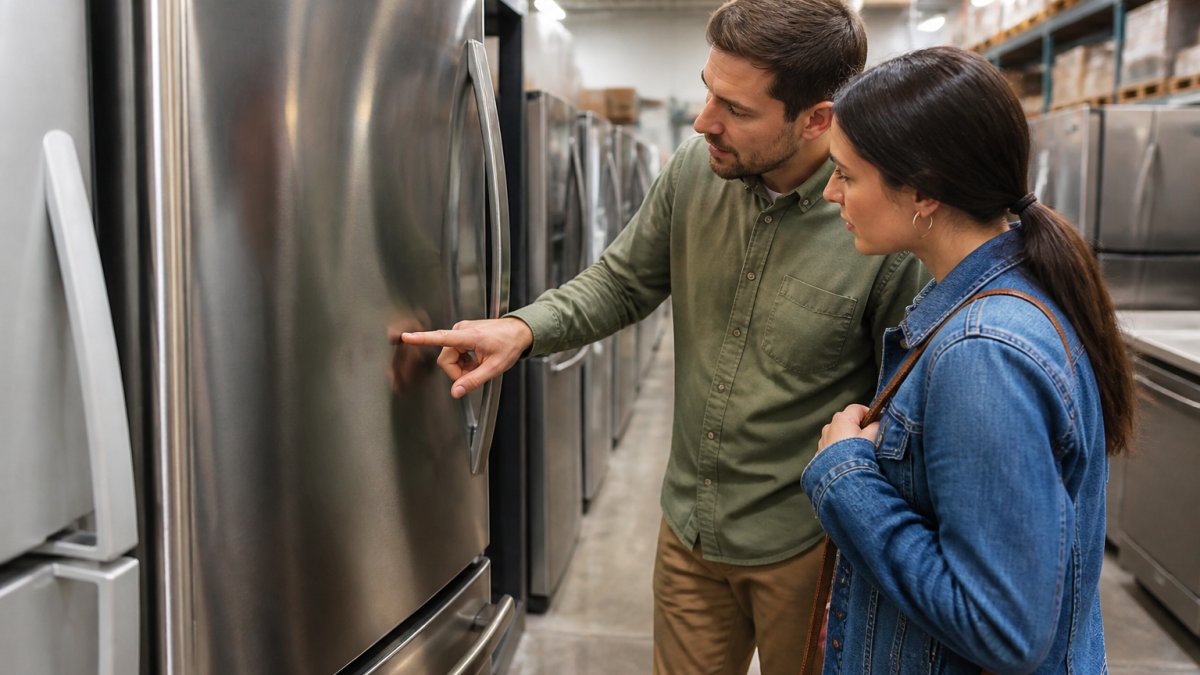
What most guides miss is the warranty question. Ask specifically whether the manufacturer warranty still applies and whether the store offers a service agreement. A cosmetic dent should never void coverage on the compressor or motor, but you want that confirmed before delivery, not after.
For landlords furnishing a rental unit, scratch-and-dent inventory is often the smartest play. The unit looks fine to a tenant, works like new, and costs less. Inspect in person when you can, and test the doors, seals, and controls before it leaves the showroom.
Best Place to Buy Appliances: Matching the Store to Your Situation
The best place to buy appliances depends less on the store and more on your credit, timeline, and budget. A buyer with savings and no urgency should shop scratch-and-dent or wait for a retail sale. A buyer with damaged credit and a dead refrigerator needs a lease option that approves fast and delivers this week.
At Furniture and Appliance 4less, we offer flexible financing through Acima, Koalafi, and Snap, local same-week delivery, professional setup and inspection, and old-product haul-away. You are not stuck waiting on a credit decision or arranging your own disposal.
Quick Comparison: Arona Home vs. Retailers vs. Local Dealers
| Factor | National Retailers | Local Dealers | Lease-to-Own Stores |
|---|---|---|---|
| Credit check | Required for financing | Varies by partner | Usually none |
| Delivery speed | Scheduled, can lag | Often same-week | Varies |
| Scratch-and-dent stock | Limited | Common | Common |
| Setup and haul-away | Extra fee, sometimes | Often included | Often included |
| Price transparency | High | High | Ask for totals |
Total Cost of Ownership and Credit Impact: What the Price Tag Doesn’t Show
Total cost of ownership is the number that actually matters, and it is the one most shoppers never calculate. Add the appliance price, delivery, setup, haul-away, any service agreement, and financing charges over the full term. A cheaper sticker with paid delivery and a high lease markup can cost more than a slightly higher price with everything included.
How to Build a Total Cost of Ownership Comparison
Most lease and retail sites hide the long-term cost behind a low weekly payment. You can expose it in about ten minutes with a simple side-by-side worksheet. For each option, write down these line items and add them up:
| Cost line | Cash purchase | Store credit card | Lease-to-own |
|---|---|---|---|
| Sticker / cash price | Full price | Full price | Full price (reference) |
| Down payment or first payment | None | None | First payment at signing |
| Delivery fee | Often extra | Often extra | Usually included, confirm |
| Setup / hookup | Often extra | Often extra | Usually included, confirm |
| Haul-away of old unit | Often extra | Often extra | Usually included, confirm |
| Financing charges over full term | None | Interest after promo period | Difference between total of payments and cash price |
| Service agreement (optional) | Priced separately | Priced separately | Priced separately |
| Total cost of ownership | Sum of above | Sum of above | Sum of above |
The lease row is where the surprise lives. If the cash price is one figure and the total of payments is another, the gap between them is your financing cost, and it is usually the largest single line item in the comparison. Do the same math for a store card by estimating interest after any promotional period ends. Whichever total is lowest for your timeline is the better deal, regardless of which weekly payment looks smaller.
Does Rent-to-Own Build Credit?
This is the question the target shopper asks most, and most sales pages avoid it. The short answer: lease-to-own payments are generally not reported to the major credit bureaus the way a credit card or retail installment contract is, so completing a lease typically does not build your credit score. Some lease providers report to alternative or specialty bureaus, but those records are not the same as the mainstream credit files lenders use for mortgages and auto loans.
Store credit cards and retail installment contracts usually do report to the major bureaus. That cuts both ways: on-time payments can help your score, and late payments can hurt it. If building credit is a goal, ask each store one direct question before you commit: Do you report this account to the major credit bureaus, and to which ones? Get the answer in writing. A lease that approves you fast but never reports is a fine tool for getting a refrigerator this week, it is not a credit-building strategy.
The Neutral Takeaway
Neither path is universally right. A lease makes sense when you need the appliance now, your credit is limited or damaged, and you plan to exercise the early purchase option rather than pay the full term. A store card or retail installment contract makes sense when you qualify, you can pay within the promotional window, and you want the account to report to the bureaus. Cash or scratch-and-dent makes sense when you have savings and no urgency. The mistake is picking based on the weekly payment instead of the total cost of ownership and the credit-reporting question.
Before signing anything, request a written breakdown of the total of payments, the early purchase option amount, delivery and setup fees, and haul-away charges. Comparing those four numbers across two or three stores takes ten minutes and is the single best way to avoid a bad deal.
Total cost of ownership = cash price + delivery + setup + haul-away + service agreement + financing charges. Credit impact = whether the account reports to the major bureaus. Ask for both in writing before you sign, and compare the totals, not the weekly payment, across every option.
Frequently Asked Questions
Are Aaron’s and Arona Home the same company?
No. Aaron’s and Arona Home Essentials are separate rent-to-own businesses with different store networks, lease terms, and product mixes. Both offer lease-to-own furniture and appliances, but the payment schedules, early purchase options, and total costs differ by location and agreement. If you are comparing an Arona Home alternative for appliance deals, read the lease disclosure from each company side by side. Look at the cash price, the total of all payments, and the buyout amount before you sign anything.
Is rent-to-own a good way to buy appliances?
It depends on your situation. Rent-to-own appliances require no credit check and let you get a refrigerator or washer delivered quickly, which matters if yours just failed. The tradeoff is that total payments usually exceed the cash price by a wide margin. If you can qualify for appliance financing options through a store card or a lease partner like Acima, Koalafi, or Snap, compare the total cost against the rent-to-own total. Rent-to-own makes the most sense when speed and approval certainty matter more than the lowest final price.
Are scratch-and-dent appliances a good deal?
Often yes, if you check three things. First, confirm the damage is cosmetic and does not affect the door seal, controls, or drum. Second, ask whether the manufacturer warranty still applies and get it in writing. Third, compare the discounted price against the new model price to confirm the savings are real. Scratch-and-dent appliances from a dealer that inspects and tests units before resale carry less risk than scratch-and-dent floor models sold as-is with no service agreement.
How can I compare the total cost of rent-to-own appliance deals?
Add up every payment across the full term, not just the weekly or monthly amount. Include the down payment, delivery and installation fees, and any service agreement charges. Then compare that total to the cash price at a retailer and to the buyout price if you plan to pay off early. A lease with a low weekly payment over a long term can cost more than one with a higher payment over fewer weeks. Ask for the early purchase option terms in writing before signing.
Where is the best place to buy appliances on a tight budget?
Start with local dealers that stock scratch-and-dent and refurbished appliances, since inspected units usually cost less than new retail and still carry a warranty. Compare against big-box sales and price-matching policies if you can pay upfront or qualify for store credit. If you need flexible payment plans and no credit needed approval, a lease-to-own dealer with same-week delivery and haul-away service solves the immediate problem. Get the out-the-door total from each option before deciding.