
Last Updated: November 17, 2026
Quick Summary
To furnish a house with kids on a budget, set a hard spending cap per room before you shop, then buy needs first: beds, appliances, seating, a dining table, and storage. Furnish gradually over the first 90 days, use secondhand pieces with a safety checklist, and refresh what you already own before buying new.
- Weight the budget toward daily-use rooms: living room 25%, primary bedroom 20%, kids’ bedrooms 20%, kitchen 20%.
- Keep a 5% buffer for delivery, setup, and repairs instead of spending every dollar on furniture.
- Treat the first two weeks as function only: beds, working appliances, a dining surface, and basic clothes storage.
- Buy mattresses and most upholstered items new, but used solid wood tables, shelves, and dressers are often better value.
- Run the cost-per-use math: a $120 solid wood shelf lasting a decade beats a $40 particleboard one replaced every two years.
Table of Contents
- Start With a Family Home Furnishing Budget Checklist
- Essential Furniture for a New Home: What to Buy First
- How to Furnish a House Gradually Without Overspending
- Kid-Friendly Living Room Furniture That Survives Daily Life
- Finding Affordable New and Secondhand Furniture Safely
- Furnishing Small Spaces and Shared Kids’ Rooms
- Refresh What You Own Before Buying New
- Build Your Room-by-Room Plan With Furniture and Appliance 4less
- Frequently Asked Questions
Start With a Family Home Furnishing Budget Checklist
Learning how to furnish a house with kids on a budget starts with one rule: set the spending limit before you set foot in a store. Families who shop without a number buy on emotion.
Many parents moving into an empty home feel overwhelmed by the total. The fix is simple. For a deeper walkthrough, see how to calculate your home furnishing budget.
Here is a practical checklist to work through:
- Write down the total you can spend without touching emergency savings
- List every room and mark it as urgent, soon, or later
- Rank purchases inside each room as need or want
Sample Whole-House Budget Allocations
Exact amounts depend on your income and your timeline, so treat these as shares, not fixed prices. A common approach is to weight the budget toward the rooms your family uses most.
| Room | Share of Budget | Why It Ranks Here |
|---|---|---|
| Living room | 25% | Daily family use, seating, storage |
| Primary bedroom | 20% | Mattress and bed frame come first |
| Kids’ bedrooms | 20% | Beds, storage, durable surfaces |
| Kitchen and appliances | 20% | Refrigerator and range matter most |
| Dining and entry | 10% | Table, chairs, hooks, shelving |
| Buffer | 5% | Repairs, delivery, surprises |
Share of Budget
That buffer line matters more than it looks. A common mistake is spending every dollar on furniture and leaving nothing for delivery, setup, or a repair. Keep it.
Essential Furniture for a New Home: What to Buy First
The essential furniture for a new home is the short list your family cannot function without: beds, a sofa, a dining table, storage, and working appliances. Everything else can wait.
New homeowners often buy decor first because it is fun and cheap. Then they sleep on a mattress on the floor for a month. Skip that trap.
Needs Before Wants: A Priority Order
Work down this list and stop when the money runs out:
- Beds and mattresses for every family member
- Refrigerator and range, or whatever appliance your home lacks
- Sofa or seating in the main living space
- Dining table and chairs
- Dressers and shelving for clothes and toys
- Desk or homework spot for school-age kids
- Decor, rugs, and wall art last
If you are starting from an empty apartment, our guide on budget furniture for a first apartment walks through this exact order.
How to Furnish a House Gradually Without Overspending
Furnishing gradually is the smartest money move a family can make, but “buy slowly” is not a plan. What actually keeps a budget intact is a phased schedule with decision rules for what to buy now, what to borrow, and what to postpone. Empty rooms feel uncomfortable, and that discomfort is exactly what pushes parents into a single weekend spending spree.
Use a three-phase plan tied to the first 90 days in the home.
Phase 1: The First Two Weeks (Function Only)
Buy or borrow only what the family needs to sleep, eat, and store food. That means beds and mattresses for every person, a working refrigerator and range, a dining surface with enough seats, and basic dressers or bins for clothes.
- Set up beds first, even if frames are temporary
- Confirm appliances work before buying any furniture
- Use plastic bins or cardboard boxes as temporary dressers
Watch out: buying a sofa in week one because the living room looks empty often means settling for the first available piece instead of the right one at the right price.
Phase 2: Weeks Three Through Eight (Daily Use)
Once sleeping and eating are handled, furnish the rooms your family uses every day. This is when the living room seating, a homework desk, and toy storage earn their place. Measure each room before shopping, and buy one anchor piece per room, then pause to see how the space actually gets used.
A simple decision rule for each purchase:
- Does the family use this room daily? If no, postpone.
- Does the piece solve a problem you have hit more than once? If no, postpone.
- Can you find it used in good condition? If yes, check it against the secondhand safety list before buying.
- Does it fit the measured space and the room plan? If no, walk away.
Phase 3: Months Three Through Six (Comfort and Style)
Decor, rugs, wall art, and matching sets come last. By this point you know where the family actually gathers, which surfaces get abused, and which rooms stay empty. That knowledge prevents expensive mistakes.
- Watch markdown and clearance cycles instead of buying at full price
- Keep a running wish list and revisit it monthly
- Say no to anything that does not fit the room plan
What to Borrow, Rent, or Postpone
Not every gap needs a purchase. Borrowing and postponing are legitimate budget tools, not failures.
- Borrow: extra dining chairs for holidays, a crib for a short-term need, a desk for a temporary homework setup
- Rent: short-term furniture for a temporary living situation, if the rental period is clearly shorter than the time it would take to resell a purchase
- Postpone: guest room furniture, formal dining pieces, decorative shelving, and any item for a room the family does not use daily
A common pattern among families who stay on budget is that they treat the first 90 days as a function-only period and refuse to buy style pieces until the daily-use rooms are settled. That single rule prevents most of the overspending that gradual furnishing is supposed to avoid.
Kid-Friendly Living Room Furniture That Survives Daily Life
Kid-friendly living room furniture is furniture built for spills, jumps, and juice boxes: washable covers, rounded corners, easy-clean surfaces, and frames that hold up to daily family use. Style comes second. Survival comes first.
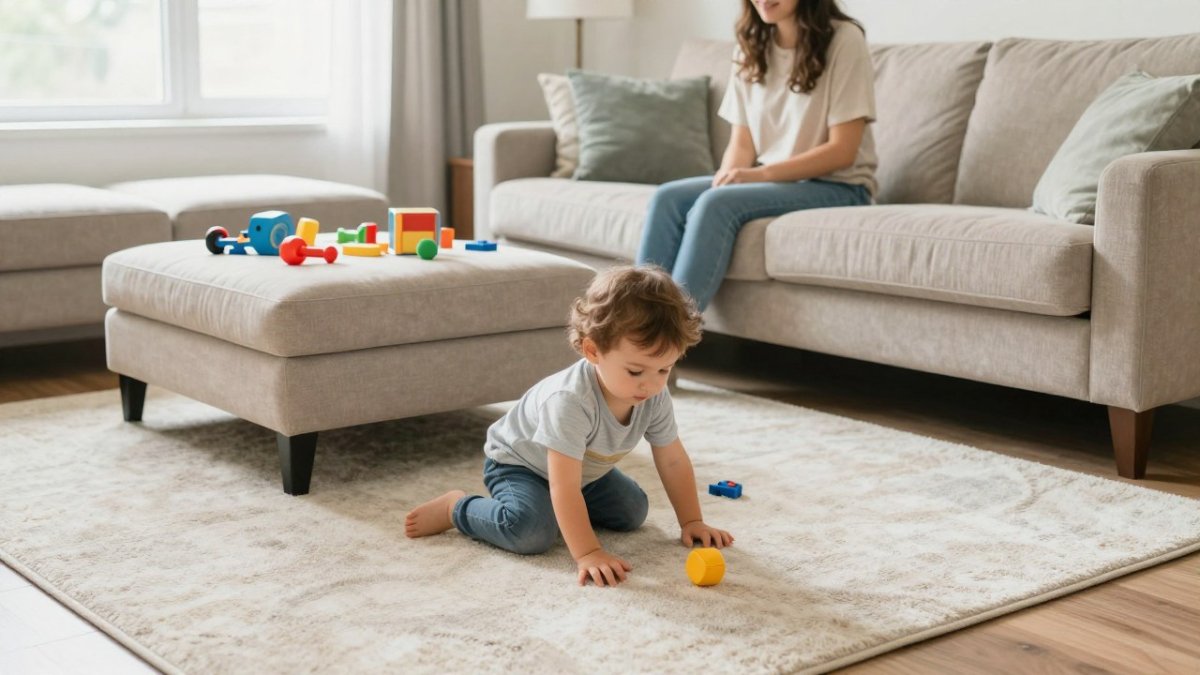
(/5-best-living-room-furniture-sets-for-families/) covers durable picks.
Finding Affordable New and Secondhand Furniture Safely
Affordable furniture comes from three places: new budget retailers, resale listings, and community donations. All three can work well. The difference is what you check before money changes hands, and how you judge whether a low price is actually a good deal over the life of the piece.
Secondhand shopping stretches a budget further than almost anything else. Thrift stores, resale listings, and community donation groups often carry solid wood pieces at a fraction of new prices.
The Secondhand Safety and Inspection Checklist
Run every used piece through these checks before you pay:
- Open every drawer and door to test the hardware and slides
- Check for wobble in chairs, table legs, and shelving
- Look for cracks, water damage, pest signs, and musty odors
Watch out: a dresser without tip-over restraint can be a hazard for young children regardless of how solid it feels, so consider a strap kit or skip the piece.
Cleaning and Sanitizing Used Furniture
Used upholstery and wood need a cleaning pass before they enter a home with kids.
- Vacuum upholstery and cushions thoroughly, including seams and under cushions
- Wipe hard surfaces with a mild cleaner appropriate to the finish
- Machine wash removable slipcovers according to the care label
For mattresses and most upholstered items, buy new. For solid wood tables, shelves, and dressers, used is often the better value.
Transporting Used Furniture Safely
Moving a used piece is where injuries and damage happen.
- Measure doorways and stairwells before you commit to a piece
- Bring straps, blankets, and a furniture dolly
- Remove drawers and doors to reduce weight
Durability and Total Cost of Ownership
A low price is not the same as a low cost. Compare pieces on expected lifespan, repairability, and resale value, not sticker price alone.
- Expected lifespan: solid wood frames and metal hardware typically outlast particleboard and plastic fittings
- Repairability: replaceable cushions, standard hardware, and removable covers extend life
- Resale value: well-made wood pieces hold value if the family moves or upgrades
A common pattern is that a $40 particleboard bookshelf replaced every two years costs more than a $120 solid wood shelf that lasts a decade. Run the cost-per-use math before you decide a cheaper piece is the budget choice.
Our guide on budget furniture stores near you covers what to check at each stop.
Furnishing Small Spaces and Shared Kids’ Rooms
Small rooms and shared kids’ rooms need furniture that does two jobs. A bed with drawers under it stores clothes. A shelving unit doubles as a room divider.
Space-saving choices that work for families:
- Bunk beds or loft beds with built-in storage
- Under-bed bins for toys and off-season clothes
- Wall shelving above door height
Shared rooms need clear zones. Give each child a defined shelf, a defined bed, and a defined storage bin. Arguments drop fast when ownership is obvious.
For set options sized for tight rooms, see our picks for affordable furniture sets for small apartments.
Refresh What You Own Before Buying New
Before you buy anything, walk through your home and ask what can be repaired, refinished, or repurposed.
Quick refresh moves that cost little:
- Repaint a dresser or bookshelf in a fresh color
- Replace drawer pulls and knobs
- Add a slipcover to a worn sofa
The cost per use test helps here. A repaired solid wood dresser that lasts ten more years beats a cheap new one that sags in two.
Watch out: painting over damaged veneer without sanding and priming leads to peeling within months. Prep the surface first.
Build Your Room-by-Room Plan With Furniture and Appliance 4less
A room-by-room plan turns a stressful move into a series of small, affordable steps.
Furniture and Appliance 4less offers furniture, appliances, mattresses, and home essentials carefully selected for quality, durability, and value.
If you are ready to start with one room, contact us to talk through your plan.
Furnishing a whole house with kids on a budget takes patience, but it does not have to happen all at once.
Frequently Asked Questions
How do you furnish a house on a tight budget with kids?
Start with a written spending limit for the whole house, then split it by room. Buy essential furniture first, like beds, a sofa, and a dining table, and add decor later. Mix affordable new pieces with secondhand finds from thrift stores and resale listings, and check durability before you buy. Flexible financing through partners like Acima, Koalafi, and Snap can spread larger purchases into monthly payments, so confirm the total cost before you sign.
What furniture should you buy first when moving into a house?
Prioritize sleep, seating, and storage. Beds and mattresses come first for every family member, then a sofa or sectional for the living room, then a dining table and chairs. Add shelving and toy storage next so belongings have a place. Decorative items like wall decor, framed photos, and personal mementos can wait until the functional layout is set. This order keeps the family home livable while you furnish a house gradually.
What furniture materials are easiest to clean with kids?
Look for washable fabrics, stain-resistant upholstery, and easy-to-clean surfaces like laminate, painted wood, and sealed leather. Slipcovered sofas let you remove and wash covers after spills. Avoid light-colored fabrics without protection and untreated wood that stains. For kids’ bedroom and toy storage pieces, rounded corners and wipe-clean finishes hold up better. These choices raise cost per use because the furniture lasts through growing children.
What should you look for when buying secondhand furniture for a family?
Inspect joints, drawers, and legs for wobbles, and check upholstery for tears or odors. Test that doors and hardware work, and look for stability, especially on tall shelving and dressers that children could tip. Ask about smoke or pet exposure. Solid wood and metal frames usually outlast particleboard. A quick repair or refinish can extend the life of used furniture, making secondhand a budget-friendly way to furnish a house without sacrificing durability.
