
Table of Contents
- How to Spot Quality Furniture Deals: Start With Materials
- How to Tell if Furniture Is Good Quality: Inspect Construction
- Quality Furniture Materials and Construction: Check for Damage
- How to Compare Furniture Prices and Verify Discounts
- Furniture Warranty and Return Policy: Protect Your Purchase
- Evaluate Long-Term Value and Expected Lifespan
- Frequently Asked Questions
Last Updated: October 18, 2026
How to Spot Quality Furniture Deals: Start With Materials
Learning to spot quality furniture deals isn’t about luck, it’s about knowing what to look for before you pay. At Furniture and Appliance 4less, we help families find pieces that last without breaking the budget, starting with materials.
A quality furniture deal combines solid construction, fair pricing, and realistic durability. Most shoppers focus only on price and miss the materials that determine whether a piece lasts five or fifteen years.
Solid Wood vs. Engineered Wood
Solid wood is lumber cut directly from trees. Engineered wood is layers of plywood, particle board, or medium-density fiberboard glued together. The difference matters for durability and cost.
Solid wood lasts longer, handles wear better, and can be refinished and repaired.
Check the frame and legs: real wood grain varies naturally, while engineered wood has uniform, printed patterns.
For budget shoppers, engineered wood isn’t bad if you know its limits. Use it for pieces you don’t expect to keep long term.
Upholstery Fabric and Durability
Upholstery fabric determines how well a sofa or chair holds up to daily use. Fabric durability is measured by a number called the Martindale count.
Look for these fabric types when hunting deals:
- Microfiber: Resists stains well. Holds up to kids and pets. Mid-range price.
- Leather: Durable and easy to clean. More expensive. Can crack if not conditioned.
- Cotton blends: Breathable and comfortable. Less stain-resistant. Moderate cost.
- Polyester: Budget-friendly. Wrinkles easily. Moderate durability.
Feel the fabric: quality upholstery feels thick and dense, not thin or papery. Cheap fabric pills easily and shows wear fast; quality fabric resists pilling and keeps its texture.
Ask about fabric content, blends of natural and synthetic fibers often outlast pure synthetics. Check seams for tight, even stitching with no loose threads.
How to Tell if Furniture Is Good Quality: Inspect Construction
Construction quality separates furniture that lasts from pieces that fall apart, the best deals combine fair pricing with solid construction.
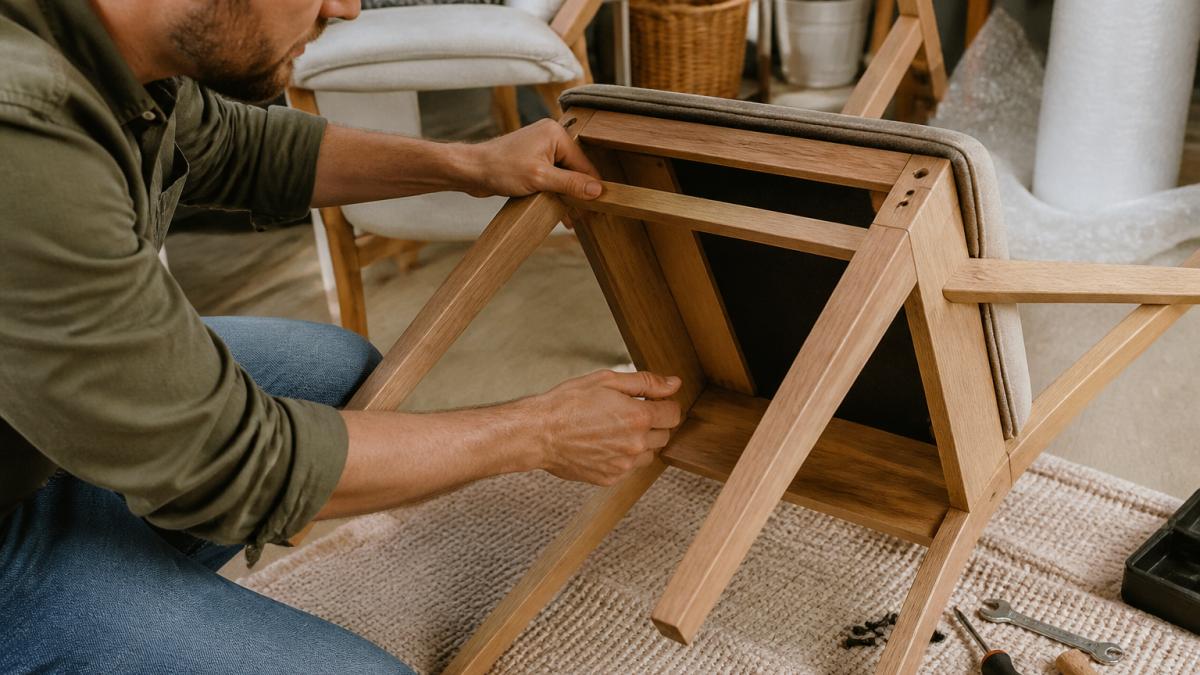
Frame Strength and Joinery
The frame is the skeleton of any piece, and a weak one ruins everything else. Frame strength comes from the wood type, the joints, and how well it’s assembled.
Press down on the frame and push from different angles. A quality frame feels rigid and solid; if the piece rocks or wobbles, the frame is compromised.
Look at the joints. Quality furniture uses one of these methods:
- Mortise and tenon: Wood pieces fit together like a puzzle. Strongest option. Common in high-end furniture.
- Dowels: Wooden pins hold pieces together. Strong and reliable.
- Pocket holes: Screws driven at angles from inside. Modern and effective.
- Nails or staples only: Weakest option. Avoid this.
Run your fingers along joints, they should be tight with no gaps. Daylight between pieces means poor joinery.
Cushions, Springs, and Foam Density
Comfort doesn’t last if the cushion structure fails. Foam density and spring quality determine how long cushions stay supportive.
Press your hand into a cushion: quality foam bounces back quickly, while cheap foam stays compressed and flat.
Check underneath if possible. Look for these spring types:
- Coil springs: Individual springs wrapped in fabric. Very durable. Expensive.
- Sinuous springs: Wavy metal strips. Good support. Common in mid-range furniture.
- High-density foam only: No springs. Works for some pieces. Less durable than spring systems.
Foam density is measured in pounds per cubic foot. Higher density means firmer, longer-lasting cushions. Density of 2.0 or higher is solid. Below 1.5 is budget foam that sags quickly.
When examining cushions in person, sit on the furniture for a minute. Quality cushions feel supportive, not mushy. They don’t bottom out when you put weight on them.
Hardware, Drawers, and Cabinet Doors
Small details reveal construction quality. Hardware like handles, hinges, and drawer slides either work smoothly or bind and stick.
Open and close drawers slowly, they should glide without sticking or rattling. Grinding or squeaking indicates poor-quality slides.
Check cabinet hinges: they should be metal, not plastic, which breaks quickly. Doors should swing smoothly and close gently without slamming.
Wiggle the handles, they should be firmly attached. Loose hardware signals poor assembly or cheap materials.
Quality Furniture Materials and Construction: Check for Damage
Even quality furniture at a discount might have hidden damage. A small scratch is fine; a cracked frame is a deal-breaker. Learn what to accept and what to avoid.
In-Store and Online Inspection Checklist
Use this checklist when shopping in person or viewing photos online:
- Check all visible surfaces for scratches, dents, or stains
- Look under cushions and inside drawers for damage
- Inspect legs and feet for cracks or missing parts
- Test all moving parts: drawers, doors, hinges, locks
- Feel the frame by pressing and pushing from multiple angles
- Check seams and stitching for loose threads or separation
- Look for water damage, warping, or discoloration
- Verify all hardware is present and functional
- Ask about the piece’s history: was it used in a pet home, smoker’s home, or damp environment
- Request close-up photos of any areas of concern
For online purchases, request detailed photos from multiple angles, the underside, back, and any areas showing wear. Don’t rely on one photo.
If you see water stains, mold, or a strong odor in photos or during inspection, walk away. These issues are expensive to fix and often indicate deeper structural problems.
Wobble, Creaking, and Sagging Tests
These three tests reveal frame and construction problems quickly.
The wobble test: Stand next to the furniture and gently rock it side to side. A quality piece barely moves.
The creak test: Sit on the furniture and shift your weight. Listen for creaking sounds. One small creak might be normal. Multiple creaks or loud creaks mean loose joints or poor construction.
The sag test: Look at the seat or cushion surface from the side. Quality furniture maintains a straight line. If the center dips noticeably, the springs or foam are failing.
How to Compare Furniture Prices and Verify Discounts
A low price isn’t a deal if it’s not actually discounted. Learning to verify discounts protects you from fake sales and helps you spot real value.
Track Historical Pricing and Sales Patterns
Furniture stores run sales constantly, but only some discounts are real. Verifying them requires research.
Use price tracking tools to check historical prices on major retailers’ sites.
Look for the original manufacturer’s suggested retail price (MSRP). Compare it to what you’re paying. A 30% discount from MSRP is solid.
Check multiple retailers for the same piece. A $400 dining table isn’t automatically a better deal than a $600 one, compare condition, warranty, delivery costs, and return policies too.
Calculate the True Cost of a Deal
Price tag isn’t the full cost. Add delivery, setup, haul-away, and warranty costs. That’s your real total.
Create a simple calculation:
- Item price: What you’re paying for the furniture
- Delivery fee: Cost to bring it to your home
- Setup fee: Assembly or installation charges
- Haul-away fee: Removing your old furniture
- Extended warranty (if applicable): Protection plan cost
- Financing interest (if applicable): Total interest on payments
Many deals look good until you add delivery and setup: a $400 sofa can cost $600 total after a $100 delivery fee and $100 setup charge. That changes whether it’s truly a deal.
Compare the full cost, not just the sticker price. That’s how you spot a real quality furniture deal.
A real deal includes fair pricing, solid construction, reasonable delivery costs, and clear warranty coverage. If any piece is missing, the deal isn’t as good as it looks.
Furniture Warranty and Return Policy: Protect Your Purchase
A warranty and return policy protect your investment. They matter more for discounted furniture because you have less recourse if something goes wrong.
What Warranties Cover and Hidden Fees
Read warranty details carefully. Not all warranties cover the same things.
Manufacturer warranties typically cover defects in materials and construction. They usually don’t cover normal wear, stains, or damage from use. A one-year warranty is standard.
Extended warranties cost $50 to $300 depending on furniture price but may cover accidental damage, stains, or wear.
Check what’s excluded. Most warranties don’t cover:
- Damage from moving or improper handling
- Stains or spills
- Fading from sunlight
- Normal wear and tear
- Damage from pets or children
- Improper care or cleaning
Ask about the return policy: most retailers offer 30 to 60 days, but some charge a restocking fee or return shipping on online orders.
Delivery, Setup, and Haul-Away Costs
These hidden costs add up quickly. Know them before you buy.
Delivery fees vary by distance and furniture size. A sofa might cost $50 to $150 to deliver locally.
Setup fees are charged if the store assembles the furniture at your home. Expect $50 to $200 depending on complexity.
Haul-away fees remove your old furniture. This typically costs $25 to $100 per item.
Ask if these fees are negotiable or included with certain purchases.
Evaluate Long-Term Value and Expected Lifespan
The cheapest furniture isn’t always the best deal. A sofa that costs $300 but lasts three years costs more per year than a $600 sofa that lasts ten years. Calculate the value, not just the price.
Material-Specific Durability and Repair Costs
Different materials have different lifespans. Know what you’re buying.
Solid wood furniture lasts 15 to 30 years with normal use. Repairs are affordable.
Engineered wood furniture lasts 5 to 10 years. Repairs are expensive and often not worth it.
Upholstered pieces last 7 to 15 years depending on use and fabric quality. Reupholstering costs $400 to $1,500.
Leather furniture lasts 15 to 25 years if maintained. Conditioning costs $50 to $100 annually.
Calculate the cost per year of ownership.
Secondhand and Scratch-and-Dent Furniture
Used and discounted furniture can be a smart choice if you inspect carefully.
Secondhand furniture is pre-owned but often still has years of life left.
Scratch-and-dent furniture has cosmetic damage but full functionality.
These options can save 20% to 50% off retail price.
Finding a quality furniture deal requires patience and knowledge. Focus on materials, construction, and fair pricing.
When you shop with Furniture and Appliance 4less, our team helps you evaluate every piece.
Frequently Asked Questions
How can you tell if furniture is good quality?
Check three key areas: materials (solid wood, high-density foam, durable upholstery), construction (tight joinery, rigid frame, sturdy hardware), and condition (no wobble, creaking, or sagging). Inspect drawers, cabinet doors, and springs for smooth operation. Quality furniture feels stable when you push on it and has maker labels or brand marks visible. Examine the wood grain and upholstery for wear and tear. A well-made piece will have consistent craftsmanship throughout.
What should you check when buying furniture on sale?
Verify the discount against historical pricing using sales tracking tools and comparable listings. Calculate the true cost by adding delivery fees, setup charges, haul-away costs, and any assembly fees. Inspect the item thoroughly for damage, especially in secondhand or scratch-and-dent furniture. Check the warranty and return policy before committing. Compare the discounted price to other retailers’ regular prices. A real deal combines a legitimate discount with solid construction, proper condition, and reasonable extra costs.
Which furniture materials last the longest?
Solid wood frames and hardwood construction typically last 10-15+ years with proper care. High-density foam cushions (above 1.5 pounds per cubic foot) resist sagging better than lower-density options. Eight-way hand-tied springs or sinuous springs provide durable support. Durable upholstery fabrics like leather, microsuede, or performance blends withstand wear better than delicate materials. Engineered wood is less durable than solid wood but acceptable for budget furniture if the frame is rigid. Metal hardware and drawer slides rated for heavy use extend lifespan significantly.
What should you look for in a furniture warranty?
Look for warranties that cover structural defects, frame failure, and spring or cushion sagging for at least 1-3 years. Check whether the warranty covers normal wear and tear or only manufacturing defects. Verify what the warranty excludes, such as damage from misuse, stains, or fading. Confirm whether the manufacturer or retailer handles claims and what the return or replacement process looks like. Understand delivery and haul-away terms separately, these are often not covered under warranty. Ask about extended warranty options if you’re purchasing high-value items.