
Last Updated: October 25, 2026
Quick Summary
Reliable furniture delivery for families means protecting your walls and floors, coordinating around your schedule, and having someone accountable when something goes wrong. Success requires preparation before delivery arrives, vetting the carrier’s insurance and damage prevention routine, understanding pricing and scheduling, managing kids safely during the process, and knowing how to respond if furniture arrives damaged or late.
- Measure doorways and document your home’s condition 24 hours before delivery to prevent damage and delays.
- Ask carriers for a certificate of insurance, their damage-claim process, and whether they use furniture pads and corner protectors as standard.
- Get delivery quotes in writing with line items for base delivery, stairs, assembly, haul-away, and rescheduling fees to compare carriers fairly.
- Create a safe zone away from the delivery area stocked with activities and snacks to keep kids occupied and out of the crew’s path.
- Document any damage immediately with photos and contact the retailer within 24 hours; keep all order confirmations, tracking numbers, and emails for your records.
Table of Contents
- Why Reliable Furniture Delivery Matters for Families
- Build a Furniture Delivery Checklist Before Your Order Arrives
- Furniture Delivery Damage Prevention: Protecting Your Home and New Pieces
- Understanding Your Furniture Delivery Time Window and Scheduling
- Managing Furniture Delivery with Kids: Safety and Logistics
- What to Do When Furniture Arrives Damaged or Late
- Getting Started with Professional Delivery at Furniture and Appliance 4less
- Frequently Asked Questions
Why Reliable Furniture Delivery Matters for Families
Getting furniture home safely is harder than it sounds. A sofa arrives scratched. Delivery takes three weeks instead of one. The old piece sits in your driveway. When you’re furnishing on a budget with kids underfoot, these problems cost time, money, and patience.
Reliable furniture delivery for families means more than showing up with a truck. It means protecting your walls and floors, coordinating around your schedule, and having someone accountable when something goes wrong.
The stakes are real: a damaged piece means returning it and starting over, and a missed window means rescheduling work or childcare.
Build a Furniture Delivery Checklist Before Your Order Arrives
Your delivery experience starts before the truck shows up. Most families skip this step and pay for it later.
Create a simple checklist 48 hours before delivery. Measure doorways, hallways, and stairwells along the route, noting tight turns, low ceilings, or obstacles.
Clear the delivery path completely. Move toys, shoes, and clutter, set up a kids’ play area in another room, and secure pets elsewhere.
Confirm the delivery window the day before by phone or email.
Document your home’s condition before delivery. Photos of walls, floors, and doorframes create a reference point if damage occurs.
If haul-away is included, prepare a spot for old furniture and tell the team where it is.
| Checklist Item | Timing | Why It Matters |
|---|---|---|
| Measure doorways and hallways | 1 week before | Prevents furniture from getting stuck |
| Clear delivery path | 24 hours before | Speeds up delivery, reduces damage risk |
| Confirm delivery window | 24 hours before | Ensures someone is home and ready |
| Document existing condition | Day of delivery | Proof if damage occurs |
| Prepare haul-away location | 24 hours before | Prevents delays and extra charges |
Furniture Delivery Damage Prevention: Protecting Your Home and New Pieces
Damage happens in seconds: a scuffed wall, a dinged corner, a scratched floor. Prevention starts with vetting the carrier before the truck leaves the warehouse.
Vet the carrier’s protection before you book
Ask three questions when you request a quote, and get the answers in writing (email is fine):
- What insurance do you carry, and can you send a certificate of insurance (COI)? A legitimate carrier should be able to email a COI naming their auto liability and cargo coverage limits. Cargo insurance covers the furniture while it’s on the truck; general liability covers damage to your home. These are different policies, and a carrier may carry one but not the other.
- What is your damage-claim process and timeline? Ask how a claim is filed, who inspects the damage, and how many business days resolution typically takes. A carrier that can’t describe the process in two sentences is a red flag.
- Do you use furniture pads, corner protectors, and floor runners as standard, or only on request? Standard protection is a signal of professional routine; on-request protection is a signal you’ll be managing the crew yourself.
If the carrier is a broker or a marketplace that subcontracts to local crews, ask who actually employs the movers and whose insurance applies. The entity on the COI should match the entity on your contract.
A low quote from an uninsured carrier is not a bargain. If a mover drops a dresser through a stairwell railing or gouges a hardwood floor, you may be filing a homeowner’s insurance claim and paying a deductible instead of the carrier paying for the repair.
Protect the route, not just the furniture
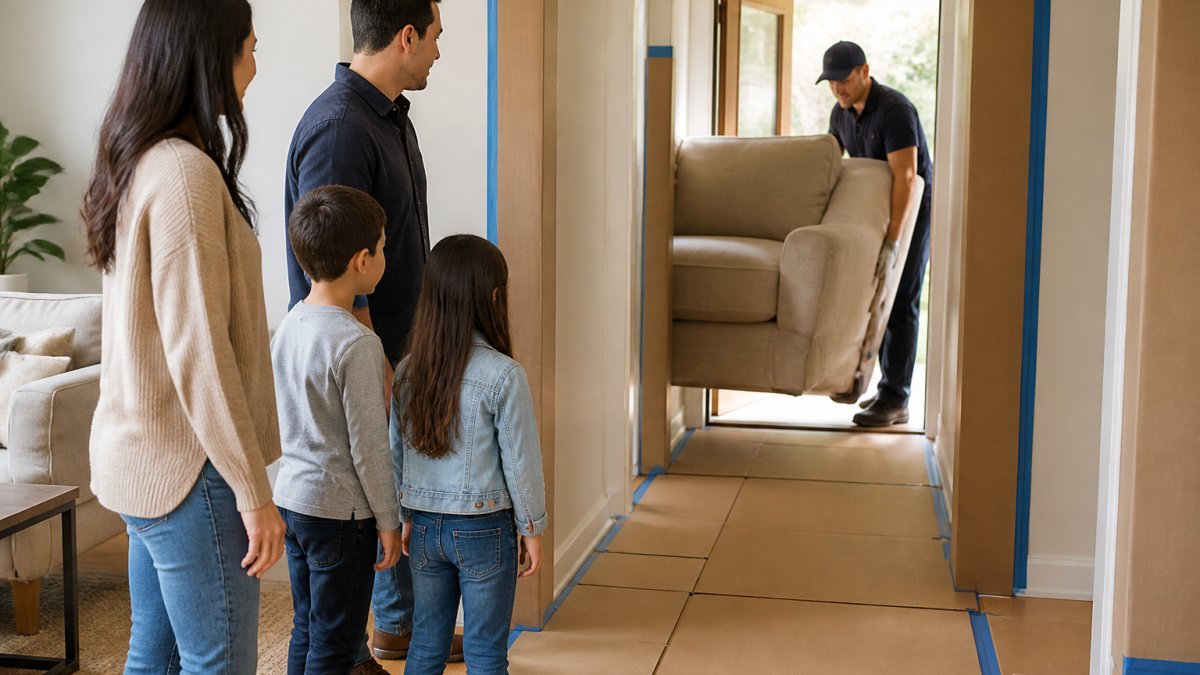
Protect high-traffic areas along the route. Use cardboard or plywood on stairs, cover doorframes with thick cardboard or moving blankets, and tape everything securely. Most professional services bring their own protection, but confirm beforehand.
When the team arrives, ask about their damage prevention routine: pads under legs, wrapped corners, protected walls. If they don’t seem prepared, speak up before they start moving.
Watch the delivery, especially around tight spaces. You don’t need to hover, but flag anything risky early; most crews appreciate the heads-up.
Inspect and document before the crew leaves
Inspect furniture immediately after placement, while the crew is still there. Check for scratches and dents, open drawers and doors, and test that the piece sits level. Photograph any damage from multiple angles and ask the crew lead to note it on the delivery receipt before you sign; a signed receipt noting damage beats a phone call the next day.
Anchor the furniture after setup
Prevention continues after setup. Check stability and tip-over risk, especially with young children: anchor dressers, bookcases, and TV stands to wall studs with the anti-tip kit that ships with most furniture (or a comparable strap kit under $15).
Know your protection options before you need them: some retailers offer damage waivers, and some delivery services carry insurance. For tactics by furniture type and room layout, see how to prevent furniture delivery damage.
Understanding Your Furniture Delivery Time Window and Scheduling
Delivery windows are a source of frustration because they’re often vague. “Sometime between 8 AM and 4 PM” is not helpful when you need to arrange childcare. The fix is to understand both how windows are built and what the quote actually includes, so you can compare carriers fairly.
Why windows are wide, and how to narrow them
Carriers route by geography and stop count, not your schedule, so wide windows exist because dispatchers can’t predict earlier stops. Ask whether the retailer offers a narrower window, say 10 AM to noon, and whether the service will call 30 minutes before arrival.
Plan around the window: arrange for someone to be home, consider a half-day off work, and plan kids’ activities around the disruption. Crews typically need 30 minutes to an hour inside, depending on furniture size and complexity.
If you need furniture urgently, same-week delivery is worth considering. Learn more about same-week furniture delivery options.
What actually drives the price of a delivery
Two quotes for the same sofa can differ by $100 or more because carriers price different line items. Ask each carrier to break the quote into these components so you can compare apples to apples:
- Base delivery, the standard curbside or in-home drop.
- Stairs and long carries, many carriers charge per flight of stairs beyond the first, and per 50-100 feet of carry distance beyond a standard threshold. A third-floor walk-up or a long driveway can add a meaningful surcharge.
- Assembly and setup, some quotes include it, some charge per piece, and some exclude it entirely.
- Old-furniture removal (haul-away), often a separate fee per item, and some carriers won’t take mattresses at all.
- Rescheduling and failed-delivery fees, ask what happens if no one is home or access is blocked. Fees vary widely.
- Inside placement vs. room of choice, confirm whether the crew will place the piece in the actual room or leave it at the first dry space.
Get the quote in writing with each line itemized. A single all-in number hides the surcharges that show up on delivery day, and an itemized quote is your best tool for negotiating one carrier against another.
Reschedule and track deliberately
Reschedule only if necessary; each one pushes you back in the queue. If you must, do it as soon as you know, not the day before, so the service can adjust its route and may waive the fee.
Track your delivery status through the retailer’s tracking number or portal. If you see a red flag like a delay notice, contact the retailer immediately rather than waiting for delivery day.
Prepare access so the window holds
A delivery that fails on access burns the window and may trigger a fee. Before delivery day, measure the front door, interior doorways, stairwell width, and the tightest turn, and note low ceilings, chandeliers, or banisters. It’s far cheaper to learn a piece won’t fit before the truck arrives.
Managing Furniture Delivery with Kids: Safety and Logistics
Delivery day with kids requires planning. The process is loud, involves strangers moving large objects, and creates temporary chaos in your home.
Set expectations beforehand: a truck will arrive, people will carry furniture inside, and there will be noise.
Create a safe zone away from the delivery area, stocked with activities, toys, books, snacks, and a tablet.
Supervise without hovering.
Brief the crew about kids in the home. Most professionals adjust their approach, becoming more careful and safety-minded.
Watch for hazards.
After delivery, do a safety check: confirm all furniture is stable, nothing was left in an unsafe position, and any TV or heavy shelf is properly anchored.
What to Do When Furniture Arrives Damaged or Late
Damage and delays happen despite best planning. Knowing how to respond minimizes the headache.
If furniture arrives damaged: Document it immediately with clear photos from multiple angles, plus the date, time, and crew names if possible.
If delivery is late: Contact the retailer or service and ask for a specific new date.
If furniture doesn’t fit: Contact the retailer immediately.
If the delivery service is unresponsive: Escalate to the retailer’s customer service.
Keep all documentation: order confirmations, tracking numbers, photos, and emails. It creates a paper trail if you dispute a charge or file a claim.
Getting Started with Professional Delivery at Furniture and Appliance 4less
Choosing the right retailer and delivery service is the foundation of a smooth experience.
When you order from us, you get professional local delivery and setup as part of our customer-first service.
Before you order, ask your retailer: Do you offer same-week delivery? Can you provide a specific delivery window? Do you include setup and inspection? Do you haul away old furniture?
When you’re ready to furnish your home, explore furniture and appliance delivery services and find options that fit your timeline and budget.
Getting reliable furniture delivery for families comes down to preparation, clear communication, and knowing your options when problems arise.
Frequently Asked Questions
How can I tell if a furniture delivery service is reliable?
A reliable furniture delivery service should be licensed, bonded, and insured. Check customer reviews for consistent praise about on-time delivery, professional handling, and proper setup. Ask whether they offer old-product haul-away and what their damage policy covers. Furniture and Appliance 4less partners with professional local delivery providers who inspect furniture upon arrival and handle setup to ensure your pieces arrive in perfect condition.
What should I include in my furniture delivery checklist?
Your furniture delivery checklist should cover: measuring doorways and hallways, clearing pathways, protecting floors and walls, confirming delivery window 24 hours before, having someone home to sign off, inspecting items immediately upon arrival for damage, and verifying assembly and haul-away services. Document the condition of your home before delivery with photos. Keep contact information for your delivery provider handy in case you need to reschedule or report issues.
What should I do if furniture arrives damaged?
Document damage immediately with photos and video before the delivery team leaves. Note damage on the delivery receipt and get the driver’s signature. Contact your furniture delivery provider within 24 hours with photographic evidence. Most professional services cover damage that occurs during transport and setup. Furniture and Appliance 4less works with delivery partners who stand behind their work and handle damage claims promptly to make things right.
How should I prepare my home for furniture delivery with children?
Create a safe zone away from the delivery area where children can play supervised. Remove toys, pets, and obstacles from hallways and doorways. Brief your children on staying clear during delivery. Consider arranging childcare if possible so you can focus on inspecting items and coordinating setup. Ask your delivery provider about timing, some families prefer early morning or evening delivery when children are less active in the home.
