
Quick Summary
Mixing furniture styles works best when one style leads the room and a second style adds accent. Aim for about 80 percent of your furniture in the dominant style and 20 percent in the accent style, then tie them together with shared finishes or colors.
- Pick one dominant style covering about 70 to 80 percent of the room, such as the sofa, bed, or main table.
- Follow the 80/20 rule, keeping roughly 80 percent of visible pieces in one style and 20 percent in the accent style.
- Keep chair seat height within about 2 inches of the sofa seat height so the pieces read as one group.
- Repeat one wood tone in at least two places to connect dark and light wood pieces.
- Fix a clashing room by removing pieces first rather than adding more accent items.
Table of Contents
- Start With a Dominant Style and a Secondary Accent
- Apply the 80/20 Rule to Set Your Proportions
- Tips for Mixing Furniture Styles for Living Room
- How to Mix and Match Sofas and Chairs for Living Room
- Mixing Dark and Light Wood Furniture in Living Room
- Tips for Mixing Furniture Styles in Bedroom
- Fixing Common Mixing Mistakes Using Pieces You Already Own
- Shop Pieces That Fit Your Mixed Style and Budget
- Frequently Asked Questions
9 Tips for Mixing Furniture Styles Without the Clash
Last Updated: November 3, 2026
Start With a Dominant Style and a Secondary Accent
Mixing furniture styles works best when one style leads. Pick a dominant style first, such as modern, traditional, or contemporary, and choose a secondary accent style to add interest. Most rooms that look intentional follow this simple rule, while rooms that feel cluttered usually have two styles competing for attention.
Here is how to pick your pair:
- Dominant style: Covers about 70 to 80 percent of the room (sofa, bed, main table)
- Secondary accent: Shows up in 15 to 20 percent of the room (a chair, lamp, or side table)
- Shared element: Connects the two, like a common wood tone or color
Watch out: Do not pick two strong styles of equal weight. That is the most common reason a mixed room looks like a mistake.
Apply the 80/20 Rule to Set Your Proportions
The 80/20 rule is a simple guide for balance. Roughly 80 percent of your furniture should follow one style, and 20 percent should bring in a contrasting style. This keeps the room calm while still giving it personality.
The rule is easier to use when you count visible pieces rather than square footage. A common pattern is to count the pieces a person actually sees from the main doorway: the sofa, coffee table, two accent chairs, side table, floor lamp, and rug. In a seven-piece living room, that means about five or six pieces carry the dominant style and one or two carry the accent style. A larger room with ten or more visible pieces can absorb a slightly higher accent share, while a small space usually looks best closer to 90/10 because every piece is seen at once.
Try this check. Stand in the doorway and look at the room. If the eye settles on one clear look with a few surprising details, the proportions are working. If nothing feels dominant, remove a few accent pieces before you buy anything new.
Watch out: The 80/20 rule is about visual weight, not piece count alone. A single oversized accent piece, such as a bold patterned armchair or a heavy dark wood buffet, can read as more than 20 percent of the room even if it is only one item. Weigh large or high-contrast pieces more heavily when you do the count.
If the room feels off, adjust in this order: remove the smallest accent first, then swap a pillow or lamp to repeat the dominant style’s color or finish, and only then consider replacing a major piece.
Tips for Mixing Furniture Styles for Living Room
The living room is usually the best place to start mixing styles, since it has room for a sofa, chairs, and tables that can carry different looks. A common approach is to anchor the room with one large piece, then add two or three smaller pieces in a second style.
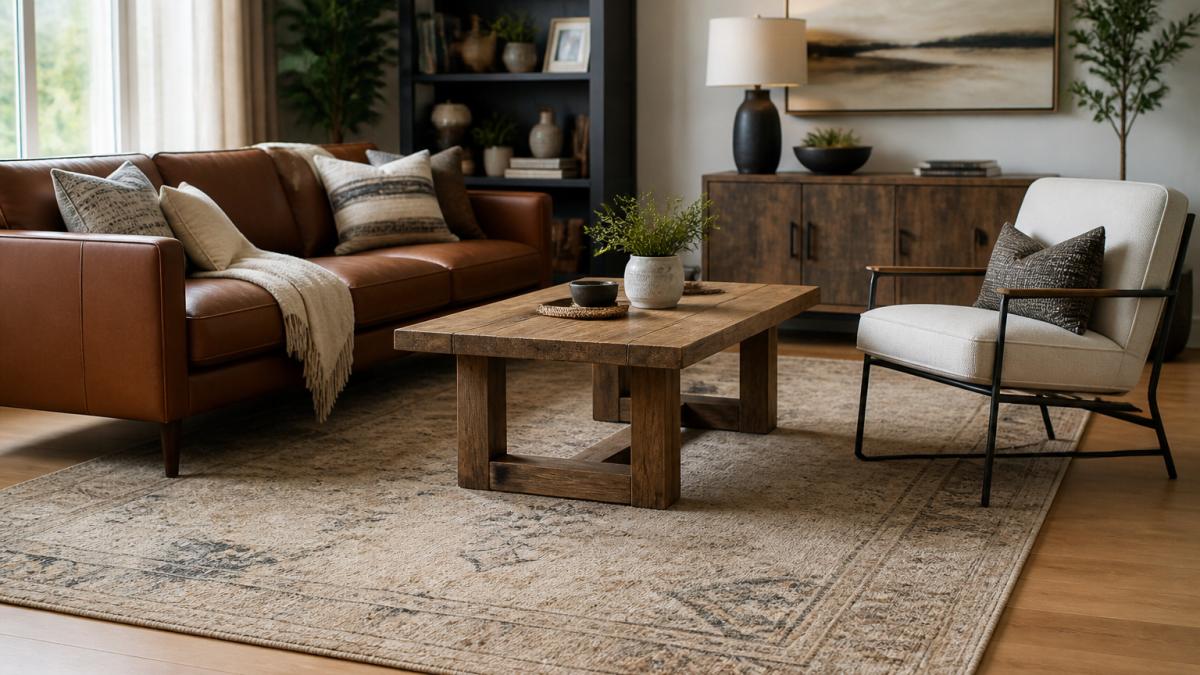
- Use a neutral sofa as the base
- Add a contrasting coffee table in wood or metal
- Bring in one or two accent chairs with a different silhouette
- Finish with pillows and a rug that repeat one color
How to Mix and Match Sofas and Chairs for Living Room
Pairing a sofa with chairs is one of the trickiest parts of mixing styles. The safest method is to match the height and the leg style, then vary the fabric or the back shape. For example, a clean-lined contemporary sofa pairs well with a mid-century accent chair that has similar wood legs.
Four measurements do most of the work:
- Seat height: Keep chair seat height within about 2 inches of the sofa seat height so the grouping reads as one conversation area.
- Arm profile: Match a low, straight arm to a low, straight arm, or a rolled arm to a rolled arm. Mixing a tall rolled arm with a low track arm is the most common reason a pairing looks accidental.
- Leg style and finish: Repeat the leg material and tone, such as tapered walnut legs on both pieces, even when the upholstery differs.
- Back shape: Vary the back shape to add interest, but keep the overall back height within a few inches so the silhouettes relate.
A practical sequence is to place the sofa first, then bring in one chair that shares two of the four traits above, live with it for a week, and add the second chair only if the grouping still feels balanced. Two accent chairs in the same secondary style usually look more intentional than two different accent chairs.
Watch out: Do not pair a very deep sofa with shallow accent chairs in a small room. The depth mismatch pushes the chairs out of the conversation zone and makes the layout feel cramped even when the styles technically match.
Mixing Dark and Light Wood Furniture in Living Room
Dark and light wood can sit together comfortably when they share an undertone. Warm woods, like honey oak and walnut, tend to work with one another, while cool grays and blonde finishes pair with other light tones. Mixing the two families without a bridge often looks uneven.
To connect them, repeat one wood tone in at least two places. A light oak side table and a dark walnut coffee table can look planned if the room also includes a rug or artwork that picks up both tones.
Tips for Mixing Furniture Styles in Bedroom
Bedrooms are more forgiving than living rooms, but they still need a clear anchor. The bed is usually the dominant piece, so choose a frame that sets the overall style. Then add nightstands, a dresser, or a bench in a secondary style that shares a finish or color.
Keep the bedroom calm by limiting your palette to two or three colors. Mattress choice also matters here, since comfort is one of the most important decisions for a bedroom.
Fixing Common Mixing Mistakes Using Pieces You Already Own
You can fix most clashing rooms without buying new furniture. Start by identifying the two or three pieces that feel out of place. Often they have the wrong scale, the wrong color temperature, or too many competing details.
A simple process:
- Remove one piece from the room for a week
- Move a piece you already own to a new spot
- Swap a throw pillow or lamp to repeat a color
- Keep only the items that support your dominant style
Watch out: Do not add more accent pieces to fix a clash. Usually the fix is taking something out.
Shop Pieces That Fit Your Mixed Style and Budget
Once you know your dominant and secondary styles, shopping becomes much easier. Look for pieces that share a finish, shape, or color with what you already have. Choosing one or two new items at a time helps you test the mix before committing to a full room.
Budget matters too. Plan how much you want to spend before you shop, then compare the value of each piece. If you are furnishing a whole apartment, our guide on how should you furnish an apartment on a budget? can help you prioritize. You can also use how to calculate your home furnishing budget to set a clear spending limit, and how to spot quality furniture deals to judge whether a price is worth it. For mattresses that fit a tight budget, see how to choose discount mattresses without overpaying?.
Mixing styles without the clash comes down to one dominant look, a clear secondary accent, and a few shared details that tie the room together.
Frequently Asked Questions
What is the 2/3 rule for furniture?
The 2/3 rule suggests that about two-thirds of a room’s furniture should share one dominant style, while the remaining third brings in a contrasting secondary style. For example, if most of your pieces are clean-lined modern, one or two traditional or vintage pieces will add interest without making the room feel disjointed. It is a starting point rather than a strict measurement, so adjust it based on how busy your space already feels. Repeating a color or finish across both styles helps the mix look intentional.
Is it okay to mix different styles of furniture?
Yes, mixing furniture styles is widely accepted and often produces more personal, layered rooms. The key is to keep a dominant style so the space does not look random. Connect the pieces with a unifying element such as a shared wood tone, a limited color palette or a repeated pattern in the textiles. Balance also matters: pair a heavy, ornate piece with something simpler so neither overwhelms the room. Start with one or two pieces from a second style and build from there.
How do you mix and match sofas and chairs in a living room?
Choose a sofa as your anchor piece, then select chairs that share its color family, height range or leg style. A tufted sofa can pair well with a sleeker accent chair if both use similar fabric weight or a repeated color. Keep scale in mind so the chairs are not dramatically larger or smaller than the sofa. Varying the silhouette while keeping a common finish, such as matching wood on the legs or arms, creates a cohesive look that still feels curated.
Can you mix dark and light wood furniture in a living room?
Mixing dark and light wood tones works well when you limit the number of wood finishes to two or three and spread them evenly around the room. Place the darkest piece as a grounding anchor, such as a coffee table or media stand, and balance it with lighter pieces elsewhere. Repeating one wood tone in a small accessory, like a picture frame or a tray, helps connect the two. Consistent undertones, either warm or cool, make the mix look more deliberate.
