
Last Updated: October 29, 2026
Quick Summary
A furniture haul away service removes unwanted sofas, beds, dressers, and appliances from your home and handles their disposal, donation, or recycling. The crew assesses the items, carries them out, and loads them, usually in a single appointment. Confirm the quote in writing before the crew arrives.
- Confirm in writing what the quote includes before the crew arrives.
- Stairs, heavy items, and disposal fees are the usual sources of surprise charges.
- Clear a path from the items to the door before the crew arrives.
- Ask the company where your items go and whether you can get documentation.
- Hazardous materials like paint, batteries, and fluorescent bulbs may need separate disposal.
Table of Contents
- How a Furniture Haul Away Service Works From Pickup to Disposal
- 1. Saves Time and Physical Effort
- 2. Protects Your Home, Stairwells and Walls From Damage
- 3. Keeps Usable Pieces Out of the Landfill Through Donation Pickup
- 4. Predictable Pricing Compared With DIY Hauling
- 5. Safer Than Moving Heavy Items Yourself
- 6. Handles Bulk Items and Multiple Rooms in One Trip
- What Happens to Furniture After Junk Removal
- Frequently Asked Questions
How a Furniture Haul Away Service Works From Pickup to Disposal
A furniture haul away service removes unwanted sofas, beds, dressers, and appliances from your home and handles their disposal, donation, or recycling. The crew arrives, assesses the items, carries them out, and loads them for transport. For most households, the process is a single appointment that clears the space in one visit.
A typical job follows a predictable sequence. You describe or photograph the items when you book, the company gives you a price based on what it can see, and the crew arrives within a scheduled window.
Watch out: confirm in writing what the quote includes before the crew arrives. Stairs, heavy items, and disposal fees are the usual sources of surprise charges.
Most families benefit from understanding this sequence before they book. Knowing what happens to each piece makes it easier to decide what to include and what to keep. We recommend clearing a path from the item to the door before the crew arrives, which often speeds up the job.
The article breaks the job into a predictable sequence, summarised below.
| Step | What happens | Tip from the article |
|---|---|---|
| Booking | You describe or photograph the items | Give accurate item details |
| Quote | Company prices based on what it can see | Confirm the quote in writing |
| Pickup | Crew arrives within a scheduled window | Clear a path to the door first |
| Loading | Crew carries items out and loads them | Note any stairs or heavy items |
| Disposal | Items are disposed of, donated or recycled | Ask where items go |
1. Saves Time and Physical Effort
Moving a sofa down a flight of stairs is slow work, and it is easy to get hurt doing it alone. See how families arrange reliable furniture handling so the work is done for them.
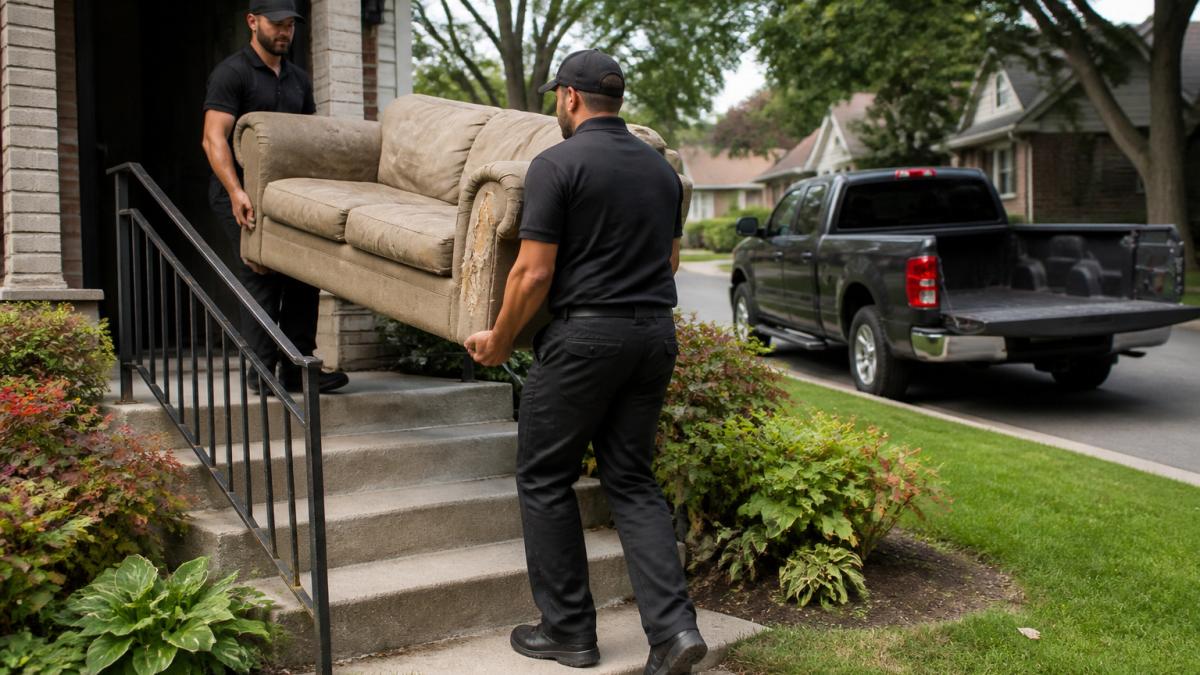
Households that schedule a pickup usually still need to empty drawers, disconnect appliances, and move smaller items to the door. Treat the crew’s arrival as the final step, not the first.
Best for: Households with heavy furniture, multiple floors, or limited help.
Skip if: You only have one small item that fits in a standard car trunk.
2. Protects Your Home, Stairwells and Walls From Damage
Doorframes, banisters, and drywall are often the first casualties of a DIY furniture move. Learn how to prevent furniture delivery damage before you plan the move.
Damage still happens, so document your home before the crew arrives. Take photos of the staircase, hallway, and doorways. If a scratch or dent occurs, you have a clear record for the conversation with the company.
3. Keeps Usable Pieces Out of the Landfill Through Donation Pickup
Not every item you remove needs to be thrown away. Donation can keep usable items in circulation, though availability depends on the item and the provider.
How donation routing actually works
Donation is rarely a single step. A typical path looks like this:
Donation has limits, know them before you book
Donation pickup can also take longer to arrange than standard removal. Plan ahead if you want a usable sofa or dresser to go to a good home.
How to verify a company’s recycling and donation claims
“We recycle” is easy to say. Here is how to check whether it is true:
- Ask for the destination: A legitimate provider can name the transfer station, recycler, or charity partner it uses. Vague answers like “we sort it at our facility” are a yellow flag.
- Ask for a diversion rate, and how it is measured: Some companies publish the share of material diverted from landfill. Ask whether that figure is measured per load or averaged across the year, and whether it includes donation, recycling, or both.
- Check for certifications: Look for membership in a recognized industry association or a published sustainability report. Certifications vary by region, so confirm what a given badge actually covers.
- Request documentation after the job: Ask whether you can receive a receipt or summary showing where your items went. Providers that track donation and recycling can usually produce one.
- Cross-check with the charity: If a specific nonprofit is named, call it and confirm it accepts furniture from haul away companies in your area.
Donation vs. disposal: what actually gets diverted
Clean, working furniture has the best chance of being donated. Damaged, soiled, or recalled pieces usually go to disposal regardless of the service you choose. Metal and wood frames are more likely to be recycled than upholstered pieces, and appliances with refrigerant require special handling that not every provider offers. Knowing this before the crew arrives helps you set realistic expectations, and helps you decide which items are worth cleaning up to keep them in the donation stream.
4. Predictable Pricing Compared With DIY Hauling
The true cost of doing the job yourself includes more than a rental truck. Add fuel, a dolly, moving straps, disposal fees at a transfer station, and the time you lose. Many households underestimate these costs until they are already in the middle of the job.
How haul away pricing is actually structured
Ask which pricing basis applies to your items before you book, and request a written quote for your specific load. Compare furniture delivery services near you to see the options available in your area.
The cost drivers that move the number
- Access: Stairs, elevators, long carries from a third-floor walk-up, and narrow doorways add labor time. Many companies add a per-flight stair fee.
- Item type: Mattresses, appliances with refrigerant, and anything requiring special handling (pianos, pool tables, exercise equipment) usually carry a surcharge.
- Disposal fees: Transfer stations and landfills charge by weight or by load. A company that quotes a low base rate may pass disposal fees through separately.
- Timing: Same-day and weekend appointments often cost more than midweek scheduling.
Confirm in writing what the quote includes before booking, since pricing depends on the items, access and job details.
DIY vs. professional: a total-cost comparison
A fair comparison adds up everything you would spend doing it yourself, not just the truck rental:
- Truck rental: Rental costs vary by truck size, rental period, taxes and insurance.
- Fuel and mileage: Rental rates often exclude fuel and may charge per mile beyond a set allowance.
- Equipment: Dollies, straps, and moving blankets are either rented or bought, and furniture pads add to the bill.
- Disposal fees: Transfer stations and landfills typically charge by weight or load.
- Labor and time: A second person is usually needed for anything heavy, and the time spent loading, driving, and unloading is time not spent elsewhere.
- Risk: A scratched wall, a strained back, or a dropped dresser can cost more than the rental itself.
How to compare quotes fairly
Give every company the same list: item count, floor and stair details, whether an elevator is available, and any special-handling items. Ask each one to state what its quote includes.
Request a written quote that lists what is included before the appointment.
5. Safer Than Moving Heavy Items Yourself
Furniture injuries are common when people lift without help or the right equipment. Back strains, pinched fingers, and falls on stairs are the most frequent problems.
Ask whether the company carries liability insurance and confirm coverage before booking, especially for high-value or fragile items.
Safety does not replace caution on your end. Keep children and pets out of the work area, and make sure the walkway is clear of tripping hazards.
6. Handles Bulk Items and Multiple Rooms in One Trip
Many households need to clear more than one room at a time. A single haul away appointment can cover a bedroom set, a living room sofa, an old refrigerator, and a few boxes of smaller items.
Bulk pickups work best when you prepare a list. Group items by room and tell the company about any hazardous materials such as paint, batteries, or fluorescent bulbs, since some materials cannot go on a standard truck.
What Happens to Furniture After Junk Removal
Ask how your specific items will be handled after pickup and whether you can receive documentation of where they went.
Understanding the end of the process helps you decide what to include.
Frequently Asked Questions
What is the cheapest way to get rid of furniture?
Free options such as local donation pickup programs or community swap groups can work for items in good condition. For heavier or damaged pieces, a paid haul away service may be worth comparing against doing it yourself, once you factor in the truck rental, fuel, disposal fees and the time and physical effort involved. Compare a few written quotes before deciding, since prices depend on load size and job details.
How much does it cost to have a couch hauled away?
Pricing depends on how many items you have, the size of the job, access to the pickup location, and whether any stairs are involved. Request a quote for your specific items, and contact Furniture and Appliance 4less directly for current pricing.
Can furniture haul-away services donate usable items?
Some providers may be able to donate usable items. Donation depends on condition, so ask the provider how it decides what gets donated and what goes to disposal. Donation pickup from charities is another option for usable pieces you want to see go to a new home.
What happens to furniture after a removal service picks it up?
Outcomes vary by provider and by item condition. Ask the company where unwanted items go and whether it donates or recycles before you book, so you know what happens to your furniture.
For current pricing and availability in your area, visit Furniture and Appliance 4less at furnitureandappliances4less.com.
